
|
JUST ANNOUNCED!
*** SMALL GROUP TOUR ***"Hell is Empty and all the Devils are Here"
|

Dana B. Shoaf is the director of interpretation for the National Museum of Civil War Medicine. Dana had previously served as the editor-in-chief of HistoryNet, publisher of nine history magazines. He served for nearly two decades as editor of Civil War Times and prior to that, America’s Civil War magazines.
|
Poor fellows! I almost pitied them, to see them sink down by dozens at every discharge!
—Sgt. Ashbala Hill, 8th Pennsylvania Reserves, on his regiment's charge up Turner’s Gap.
General Itinerary(subject to change)
—FRIDAY NIGHT— (October 9) meet at the hotel in Frederick, and pick up your registration packet. Dana will orient the group with a short presentation, setting the stage for the touring ahead. —SATURDAY MORNING— (October 10) Burkittsville. Maj. Gen. William B. Franklin’s Headquarters, the Willard Shafer Farm. German Reformed Church Tour (historic hospital site). CRAMPTON'S GAP: Tour Civil War museum and battle sites. Box lunch in the pavilion (included in your registration). —SATURDAY AFTERNOON— (October 10) FOX'S GAP: (Pass through Middletown on the way to see house Rutherford B. Hayes stayed in after wounding). Fox Gap fighting. Wise’s Well Site (where Confederate dead were thrown), Monuments to Garland and North Carolina. TURNER'S GAP AREA: Cemetery Where Meade Watched the Battle, Pennsylvania Reserve Fighting area, walk up knoll to Cooper’s Battery location. View of the Confederate defensive line, Confederate artillery plateau. Explore main TURNER'S GAP. Side trip to Washington Monument (Civil War signal station). —SATURDAY NIGHT— (October 10) Dinner (included with your registration), special guest speaker, Antietam scholar (editor of the multi-volume Ezra Carmen papers on The Maryland Campaign of 1862) and President of the Save Historic Antietam Foundation, TOM CLEMENS, with a presentation on: "Will the Real Iron Brigade Stand Up." —SUNDAY MORNING— (October 11) Visit to the Confederate section at Mt. Olivet Cemetery. Experience shooting a Civil War musket at Dana Shoaf's home. Return to the hotel by noon, Sunday. END of TOUR |
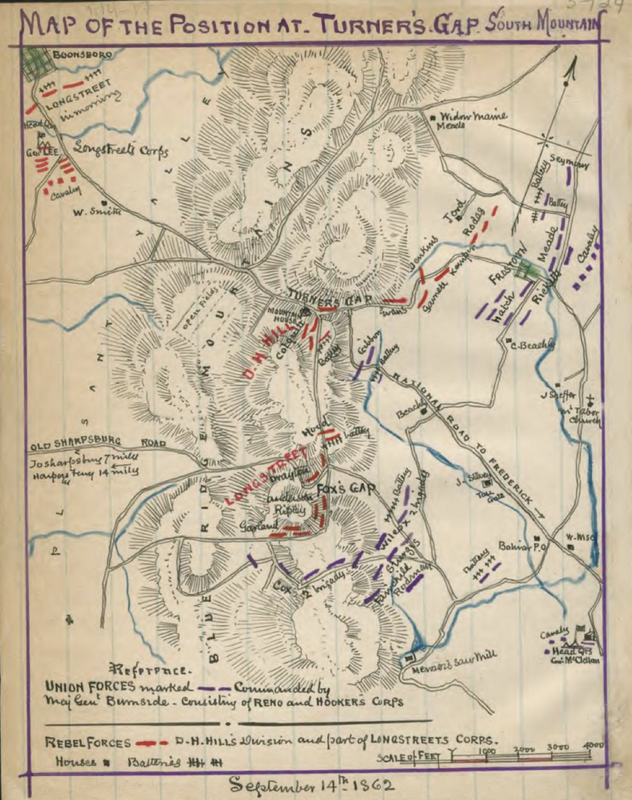
The Fall 1862 Maryland Campaign is primarily known for the September 17, 1862, Battle of Antietam. But that fight would not have occurred without the fury that raged on September 14 at three South Mountain passes: Turner’s, Fox’s, and Crampton’s Gaps. The rear guard of General Robert E. Lee’s Army of Northern Virginia fought off hard-charging Union troops of Maj. Gen. George B. McLellan’s Army of the Potomac to the tune of 5,000 casualties.
As dusk fell over South Mountain’s bloody crags, Confederate troops were forced to retreat. Just just two weeks after his victory at the Second Battle of Manassas, Lee had suffered a tactical defeat and lost the campaign’s initiative. The Confederate commander regrouped his scattered forces near Sharpsburg, Maryland, and awaited McClellan’s approach. This tour will explain the significance of the Battle of South Mountain, an oft-forgotten Antietam prequel, and will take you to some of the most off-the-beaten-path locations in the Civil War’s Eastern Theater. We’ll visit forlorn soldier gravesites and a quaint country church that was used as a hospital, and travel country roads to tour mountain gaps where a future American president fell wounded and the Iron Brigade earned its famed nickname You’ll get to walk a road trace where the Texas Brigade charged, and see other engaging Civil War sites such as the war’s most controversial mass burial location, and an extraordinary mountaintop view from a Union signal corps location. The rugged terrain, arguably the roughest in the Eastern Theater, will astonish you, and you’ll no doubt find yourself in agreement with Union Maj. Gen. Joseph Hooker who said the "precipitous, rugged, and wooded" mountainsides were "difficult of ascent to an infantry force, even in absence of a foe in front.” This tour is full of Civil War “nooks and crannies.” Don’t miss out on this one-of-a-kind expedition. 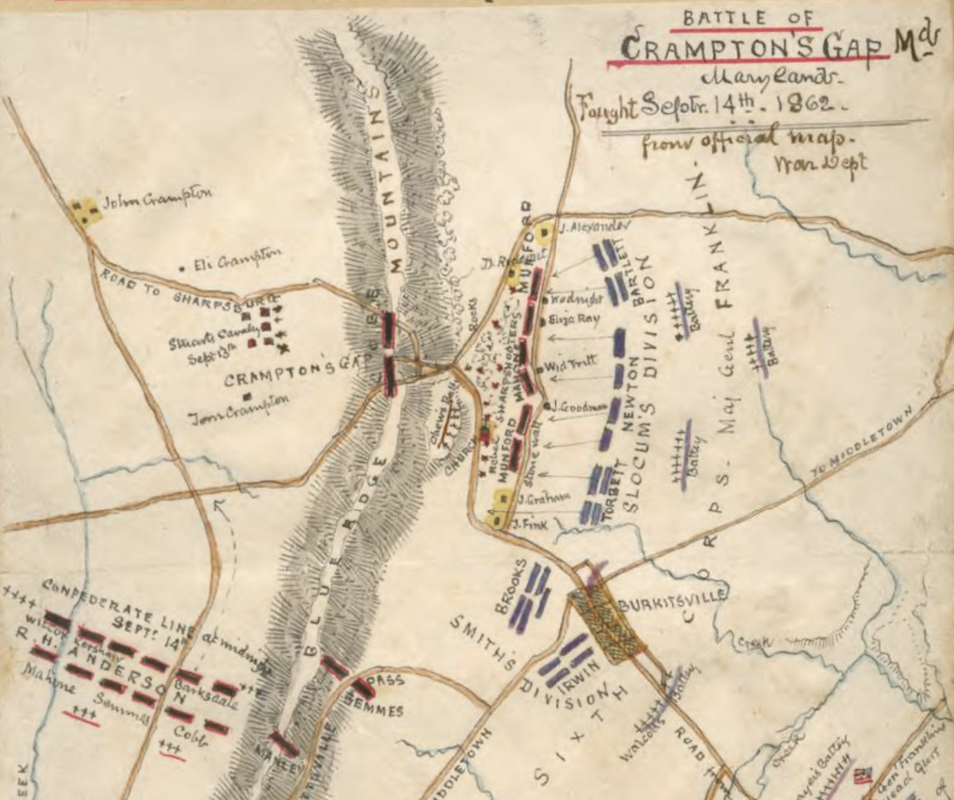
Maps by Robert Knox Sneden, Library of Congress.
|